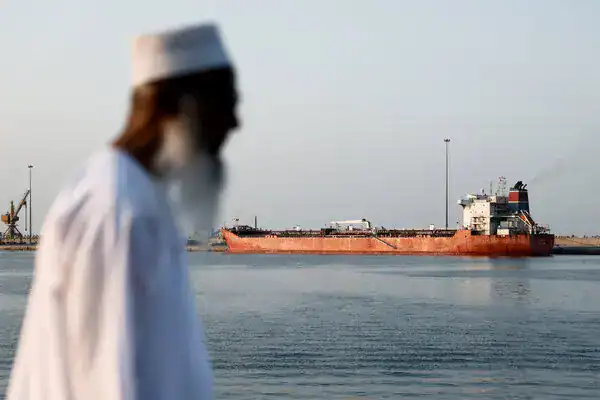

Today, we are all waking up to news that apparently the framework of a deal to ease pressure created by the closing of the Strait of Hormuz is in the works. Based on what we are reading this morning, Iran would stop its closure of the Strait, the US would lift its blockade, the cease fire would extended for 30 to 60 more days while a more extensive deal is worked out, and there is the possibility that some portion of Iran’s funds frozen abroad would be released. But the one key item that Trump said started this war is still unsettled and several of his goals were never achieved. In other words, we’re really back to where we were before the war started with nothing really accomplished and Americans continue to suffer.
Trump entered this war after receiving a security briefing from Israeli Prime Minister Benjamin Netanyahu on Iran, a briefing that our own intelligence team disagreed with, particularly regime change. The Israelis postulated that based on the current state of Iran, a more friendly regime, possibly even the return of the Shah of Iran’s family to assume power and present the US and Israel with a much more friendly government to work with. Many in the room discounted the Israeli security briefing as an oversell, primarily to motivate Trump to act and join an attack on Iran.
Trump’s biggest objective was to destroy Iran’s capability to produce a nuclear weapon, something the hawks in his circle of trust have promoted for quite a while. What is interesting is that Trump scrapped the prior agreement with Iran, negotiated by Obama in 2015 after almost 2 years of work by that administration and with the cooperation of several key nations, including the UK, Russia, China, France, and Germany. That deal provided a pathway to remove Iran’s nuclear stockpile, mothball centrifuges, and gave the IAEA unprecedented access for inspection.
However, when the JCPOA’s first sunset date approached, Trump scrapped the deal entirely, claiming it did not provide other key protections for the region. Instead of working on a diplomatic solution to help shore up those areas of concern, Trump walked away from the deal, allowing Iran to fall back to its original activities of enrichment without any inspection. Trump’s arrogance that he could have done a better job completely destroyed any foundation to work from, creating an even more volatile situation in the Gulf region. An argument can be made that Trump is really the one who destabilized the region by refusing to work with Iran to secure a better deal.
After the Gaza conflict which left that nation in shambles with no clear path to rebuilding, Israel decided to move to attack Iran’s nuclear program last June, bringing the US with it. Israel launched the twelve day war, repeatedly bombing Iranian nuclear facilities with limited success due to Iran’s measures to harden them after pulling out of the JCPOA. The US joined the fray, sending over our largest bombers and bunker busting bombs to “obliterate” the Iranian program, only to find out after Trump’s bragging it really did nothing to stop the program, just crippled it for a bit.
In January of this year, Trump started moving military assets into the Gulf as a precursor to some military action. After Netanyahu’s security briefing, Trump ignored his advisers, particularly with regards to securing the Strait of Hormuz, and attacked Iran. Israel took care of taking out the leadership of Iran, leveraging it’s advanced intelligence operations and on the ground assets. The US was focused primarily on working to eliminate Iran’s air defenses and other military operations, most of which was successful. At one point, US and Israeli fighter jets had no air defense resistance, allowing them to hit targets at will.
The problem was that Iran still retained much of its missile and, more importantly, advanced drone capabilities, creating an air of security instability in the region. Iran realized that its best approach would be to attack the oil and gas infrastructure of the region, creating an economic hardship on the world. The one spot that would have the most impact was the Strait of Hormuz, an area where 20% of the world’s oil trade passes through each day. US intelligence services knew that Iran would use the Strait to counter any US attack, but did nothing to secure it prior to the attack.
Trump rushed into the conflict without a clear strategy, accomplishing very few of his objectives. While the leadership of Iran was removed, the regime didn’t change. In fact, even more hard line leaders emerged and took positions of power, namely the son of the Ayatollah. Iran closed the Strait as well as attacked energy infrastructure in the region, driving up oil prices and, consequently, gas prices around the world. While Iran is not advancing its nuclear program, nothing has really changed on that and it wasn’t actively pursuing a bomb when Trump attacked, counter to Trump’s claims.
Will this recent “framework of a deal” yield a lasting agreement for the region? It appears that it is more a temporary band-aid on the problem to hopefully get Trump some relief at home where his approval ratings have plummeted. There are no guarantees a nuclear deal will be reached, especially anything close to resembling the JCPOA. Iran knows how to apply pressure and will continue to if threatened again. In other words, we’re back where we were before the war started and gas prices won’t be going down anytime soon due to the logistics of clearing the Strait and the damage to infrastructure in the region.